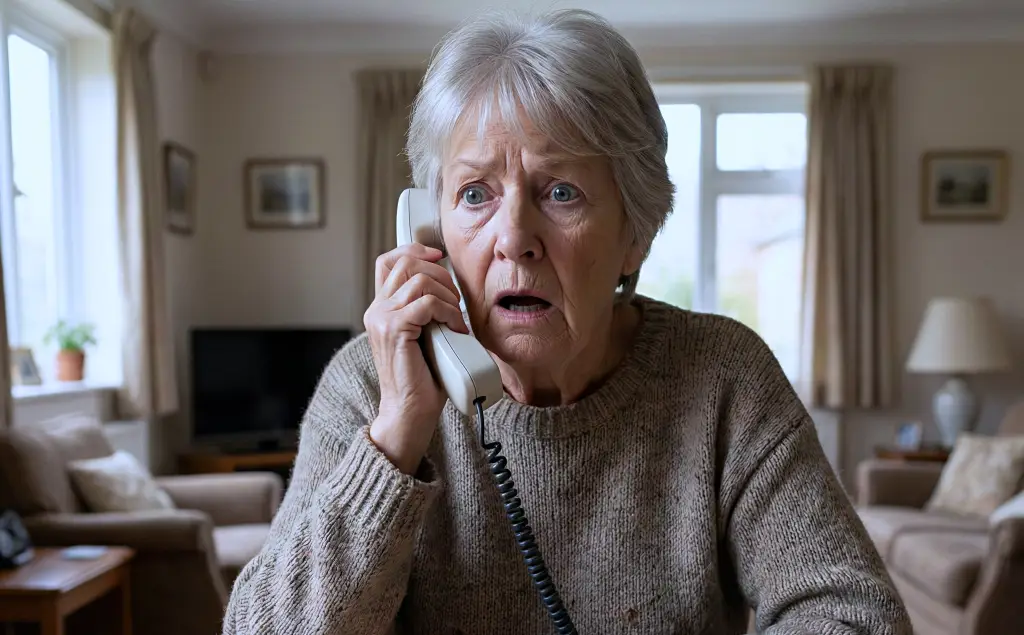
My husband died 10 years ago. Every month, I transferred $500 to pay off his debts. But one day, the bank called me.
“Mrs. Henderson, your husband never had any debts.”
When I asked where my money was, they told me.
Life before that phone call seemed simple enough. My name is Margaret. I’m 72 years old, and for the past 10 years, I had been living alone in our old house in Sacramento.
My husband, Robert, died of a heart attack back in 2015, leaving me with memories, his reading glasses still on the nightstand, and what I believed was a mountain of debt. Robert had always handled our finances. I trusted him completely.
So, when his cousin Janet came to me right after the funeral, tearful and concerned, explaining that Robert had borrowed heavily from the bank before he died, I believed her without question. She showed me papers—documents that looked official enough to my grief-clouded eyes.
“The bank will come after the house, Margaret,” she had said, squeezing my hand. “But I can help you. Send me $500 every month, and I’ll make sure they get paid. I have connections there. They’ll work with us.”
Five hundred dollars. It wasn’t easy on my widow’s pension and Social Security, but I managed. I cut coupons, stopped my book club membership, and ate less meat.
Every month, like clockwork, I would go to Western Union and wire the money to Janet’s account. Every month, she would text me: “Received. You’re doing great, Margaret. We’re getting there.”
Ten years. One hundred and twenty payments. Sixty thousand dollars.
I never questioned it. Why would I? Janet was family. She had been at our wedding and held Robert’s hand in the hospital.
When you are grieving, when you are alone, you cling to the people who seem to care. But last Tuesday, everything shattered.
I was making coffee in my kitchen, the same kitchen where Robert used to read the morning paper, when my phone rang. It was an unknown number. I almost didn’t answer, thinking it was another scam call about my car’s extended warranty.
“Mrs. Henderson?” It was a professional woman’s voice. “This is Catherine Wu from First National Bank. I’m calling about your late husband’s account.”
My heart dropped. Had I missed a payment? Had Janet forgotten to send it through?
“Yes, this is Margaret Henderson,” I said, gripping the counter.
“Mrs. Henderson, I’m looking at our records here, and I need to clarify something. We’ve never had any outstanding loans or debts associated with your husband, Robert Henderson’s account. In fact, his accounts were closed and settled within weeks of his passing in 2015. There’s nothing owed to this institution.”
The coffee pot stopped dripping. The kitchen went silent except for the hum of the refrigerator.
“What?” I whispered.
“You’re not in debt to us, ma’am. You never were. Is there a reason you’re asking about this now?”
My legs felt weak. I pulled out a kitchen chair and sat down heavily.
“I… Someone told me. I’ve been making payments.”
“Payments to whom?”
That was when it hit me. It really hit me. Not to the bank. Never to the bank. To Janet.
“Mrs. Henderson, are you still there?”
“I need to go,” I managed to say, and hung up.
I sat there for what felt like hours but was probably only minutes. My hands were shaking. Sixty thousand dollars.
Ten years of sacrifice. The vacations I didn’t take. The gifts I couldn’t give my grandchildren. The dental work I postponed because I needed that five hundred dollars for Robert’s debt.
There was no debt. There had never been any debt.
I walked to my bedroom and opened the bottom drawer of my dresser where I kept all the important papers. Every Western Union receipt, neatly filed by year. Every text message from Janet, which I had screenshotted and printed out because I wasn’t good with phones and wanted records.
“You’re doing great, Margaret.”
“Almost there.”
“Robert would be so proud.”
My vision blurred with tears, but they weren’t tears of sadness anymore. They were something else entirely. Something hot and sharp.
Who else knew? Was Janet alone in this? Or had others been laughing behind my back all these years?
Every family gathering. Every Christmas dinner. Every birthday party. Had they all known?
I picked up my phone again with trembling fingers. I needed answers. I needed to understand how deep this betrayal went. But first, I needed to know exactly where my money had gone.
I spread all the receipts across my dining table. One hundred and twenty of them, like a paper trail of my own foolishness. My reading glasses kept slipping down my nose as I calculated and recalculated, hoping somehow I had been wrong.
Sixty thousand dollars. The number stared back at me from my calculator, unchanging and cruel.
That money could have paid for my granddaughter Emma’s college tuition. It could have fixed the roof that still leaked in the corner of the spare bedroom. It could have been the European trip Robert and I always planned but never took.
Instead, it had gone into Janet’s pockets.
I made myself a cup of tea—chamomile to calm my nerves—and tried to think clearly. At 72, I wasn’t the sharp young woman I used to be, but I wasn’t senile either. I had raised three children, managed a household, and worked 20 years as a school secretary.
I knew how to organize, how to plan, how to solve problems. The question was, what exactly was I dealing with?
I pulled out my laptop, the one my son David had bought me two Christmases ago. My fingers moved slowly over the keyboard as I logged into my email. I searched for anything from First National Bank.
There it was. The estate settlement notice from 2015, clearly stating that all of Robert’s accounts had been settled with no outstanding obligations.
I had received this email. I had read it. But then Janet had come to me with those papers and I had… what? Chosen to believe family over a corporate email? Assumed there was something the bank wasn’t telling me?
I had been grieving and vulnerable, and she had known it.
My phone buzzed. A text from Janet.
“Hi, Margaret. Just checking in. Did this month’s payment go through okay? Haven’t seen it yet.”
The audacity. The absolute audacity.
My first instinct was to call her immediately, to scream, to demand answers. But something stopped me. Maybe it was all those years of watching Law & Order with Robert, or maybe it was just common sense kicking in.
If I confronted her now, she would have time to prepare, to hide evidence, to spin a story. I needed to be smarter than that.
I texted back: “Sorry, Janet. Had some issues with Western Union. We’ll send it tomorrow.”
Her response came within seconds: “No worries. These things happen. Take your time. ❤️”
That heart emoji made my stomach turn.
I stood up and walked to my kitchen window, looking out at the garden Robert had planted. The roses he had loved were blooming, red and defiant against the spring sky. What would he say if he knew?
Robert, who had trusted his cousin, who had invited her to every family event, who had lent her money when she claimed her car had broken down. He would be furious. He would demand justice. And so would I.
I sat back down and opened a new document on my computer. At the top, I typed: EVIDENCE.
Below it, I started listing everything I knew.
- Bank confirms no debt existed.
- 120 payments of $500 to Janet’s account equals $60,000.
- Western Union receipts all saved.
- Text messages from Janet. Printed copies.
- Original documents Janet showed me. Where were these?
That last point bothered me. Where were those papers Janet had shown me in 2015? I had been so overwhelmed by grief that I had just handed them back to her, trusting she would handle everything.
I had never kept copies. That was my first mistake. I wouldn’t make another.
I picked up my phone and called my son David in Portland. He was a software engineer, practical and level-headed. He answered on the third ring.
“Mom, everything okay?”
“David, I need your help with something,” I said, keeping my voice steady. “It’s complicated, and I don’t want you to worry, but I need to ask you about legal matters.”
“Legal matters? Mom, what’s going on?”
I took a deep breath. “If someone has been taking money from you under false pretenses for years, what’s that called legally?”
There was a pause. “That’s fraud, Mom. Potentially wire fraud if it crossed state lines. Why? Who’s been taking money from you?”
“I need to be sure first,” I said. “Before I say anything to anyone, I need to gather evidence. Can you help me understand what I’d need to prove it?”
“Mom, you’re scaring me.”
“I’m fine, honey. I promise. I just need to know. If I have receipts showing I sent money, and messages from someone acknowledging they received it, and proof that the reason they gave me was false, is that enough?”
“It’s a start,” David said carefully. “But Mom, seriously, what’s…”
“I’ll explain everything soon,” I interrupted. “But first, I need to make a plan. Can you email me information about fraud? What evidence matters? What I should document?”
“I’ll do better than that. I’m coming down this weekend.”
“No, David, you don’t need to…”
“Mom!” His voice was firm. “I’m coming. We’ll figure this out together.”
After we hung up, I felt something I hadn’t felt in 10 years. Not alone. I looked at my list again. I had receipts. I had messages. I had the bank’s confirmation. Now I needed everything else.
David arrived Friday evening, his face tight with worry. He had driven five hours straight from Portland without stopping. I had made his favorite pot roast, but neither of us had much appetite as I laid out everything on the dining table.
The receipts. The printed texts. The bank’s email.
He went very quiet as he read through it all. Then he looked up at me, his jaw clenched in a way that reminded me so much of his father.
“Aunt Janet did this to you?”
“I need to be absolutely certain before I accuse her,” I said, though my hands trembled as I poured us both coffee. “I need proof that those papers she showed me were fake. I need to know if anyone else was involved.”
David pulled out his laptop. “First thing Monday, we’re going to the bank in person. We’ll get official documentation. Then we’re talking to a lawyer.”